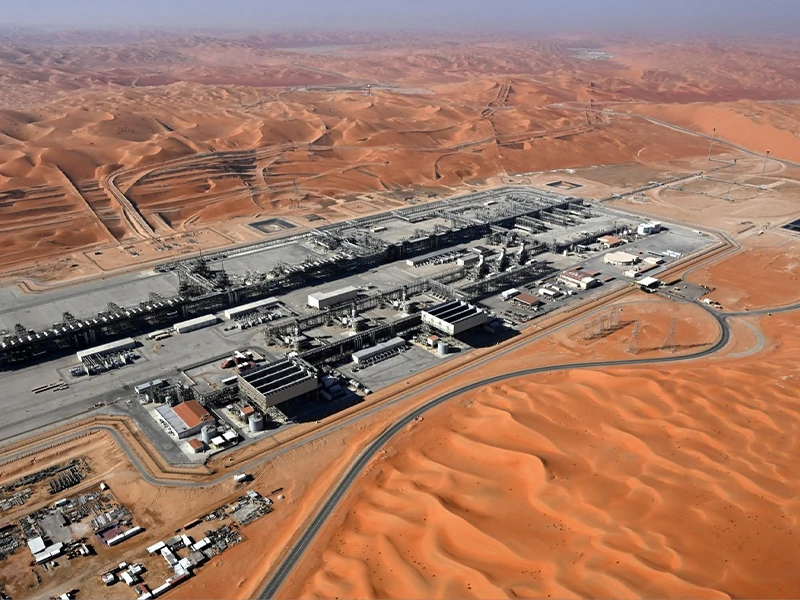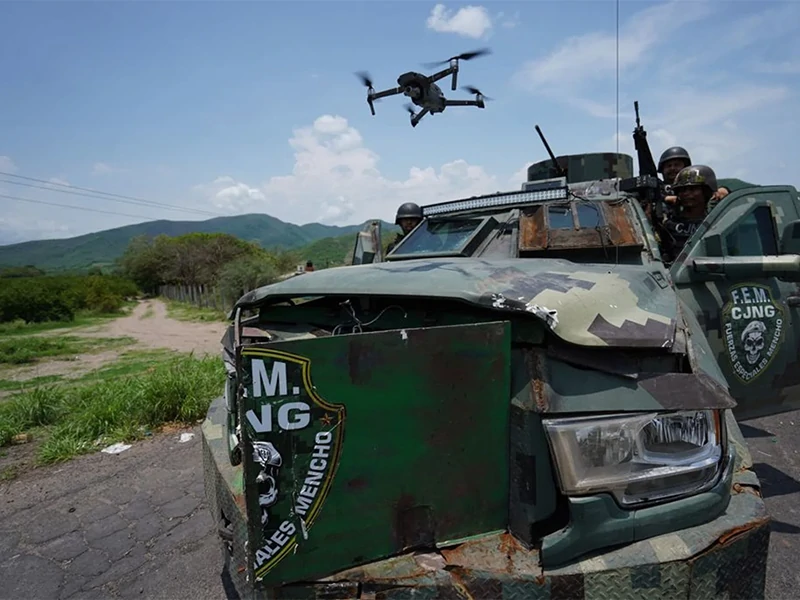
Video source: Euronews — Video shows moment drone hits Kuwait airport terminal, June 4, 2026.
For an airport, the consequences of an attack extend beyond damaged buildings. Flight movements, ground handling, passenger processing, and emergency access depend on connected facilities working together. A disruption at one location can place pressure on operations across the wider site.
Military airbases face a similar concentration of dependencies. Aircraft shelters, maintenance areas, fuel storage, runways, and command facilities each support mission readiness. Protecting these assets requires attention to how a threat might approach them—and how quickly personnel can assess and respond.
Defense depth is therefore as important as perimeter coverage. A warning provides limited value if operators cannot establish the target’s location, follow its movement, and coordinate an appropriate response. Equally, a response capability needs reliable information about the surrounding airspace and the assets at risk.
To address military airbase protection requirements, Aircohn’s layered defense architecture comprises an Early Warning Zone, Jamming Zone, and Core Protection Zone. Each layer incorporates detection and electronic countermeasure capabilities suited to its role. A centralized command-and-control platform connects target information, alerts, and response resources, enabling coordinated action from outer-area early warning to core-area protection.
Within this framework, the CB-6006 provides passive RF detection and identification, while the CB-6025F and CB-6010 EWALL deliver complementary layers of SDR-based jamming and directional electronic shielding. The CB-6020 provides mobile reinforcement for temporary protection and supplementary coverage. Coordinated through the CB-6008, these systems can be configured according to threat characteristics, site conditions, and broader air-defense requirements.
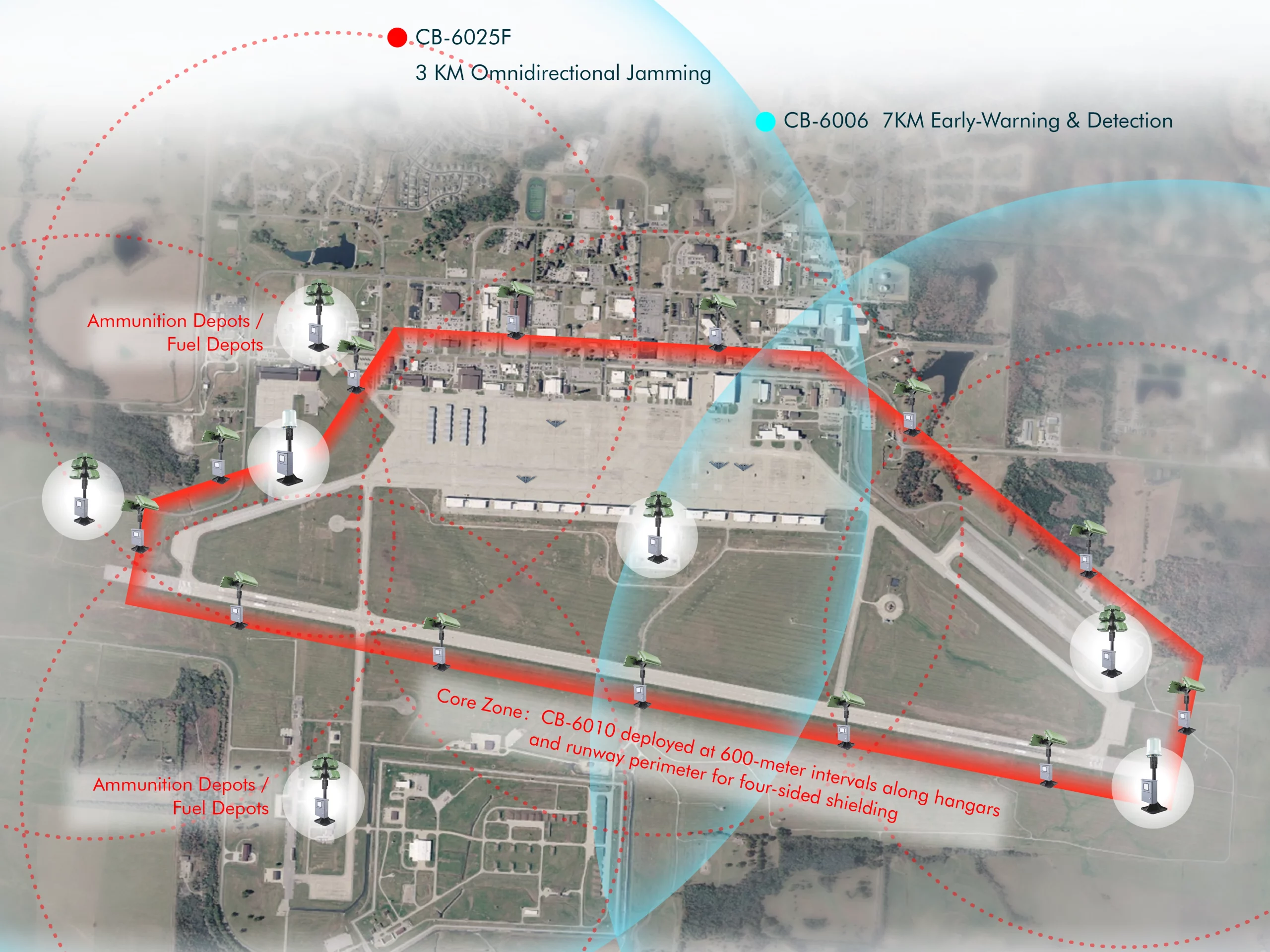
Airport deployment also demands careful management of the electromagnetic environment. Countermeasures must be coordinated with aviation communications, navigation systems, and authorized activities.
The Kuwait attack is a reminder that airport security must account for both physical damage and operational disruption. A connected, layered counter-UAS architecture helps turn individual protection measures into a coordinated capability, supporting the security of critical assets and the continuity of aviation operations.
Contact AIRCOHN Technology for a customized VIP technical consultation.
#KuwaitAirport #AirportSecurity #AirbaseDefense #CriticalInfrastructureProtection #CounterUAS #CUASSystems #DroneDetector #AntiDroneSystem